THE MOVIE
FINAL VOTE

Two Politicians.
Five Trials.
One Survivor.
Their policies created victims.
Now the victims want justice.
And the world wants blood.
For the first time ever, a live-action feature film allows viewers to determine the final cut. Vote RED or vote BLUE — the winning side’s ending becomes canon.
FINAL VOTE: CHARACTERS
-
![Poster of a man in a suit with a serious expression, with the text 'Jack Whitford: The Man Behind the Smile. The final vote will decide his fate.']()
JACK WHITFORD
Republican Jack Whitford is the kind of politician who never loses the room. A lifelong power player, he rose from city council to mayor of Crestfall City on a message of strength: law and order always wins. He is polished, charming for the cameras, and completely unwavering when it comes to projecting control. Jack believes that fear keeps society in line — and he’s not afraid to govern through it. He champions aggressive policing, harsher sentencing, expanded surveillance authority, and gun ownership as a “foundational freedom.” He points to crime stats when they suit him and dismisses community outrage when it doesn’t. If wealthier neighborhoods feel safe and the news cycle praises his leadership, then the system — his system — is working. When violence erupts in communities he deems “high-risk,” he simply calls it the cost of freedom.
But Jack’s confidence comes with a cold edge. Behind closed doors, he votes down gun reform and expanded ER access with a shrug, calling concerns “exaggeration” and “emotional politics.” He dismisses immigration failures as unfortunate paperwork issues and reproductive-care crises as rare hypotheticals. His priority isn’t preventing tragedy — it’s preventing regulation. Every time he chooses the talking point over the human consequence, another life slips into the gap his policies created. In Final Vote, Jack isn’t forced to face a partisan opponent — he is forced to face the very people who died because he decided their safety wasn’t worth political risk. For the first time in his career, he is not behind a podium. He is on trial. And he cannot filibuster his way out of this room.
-
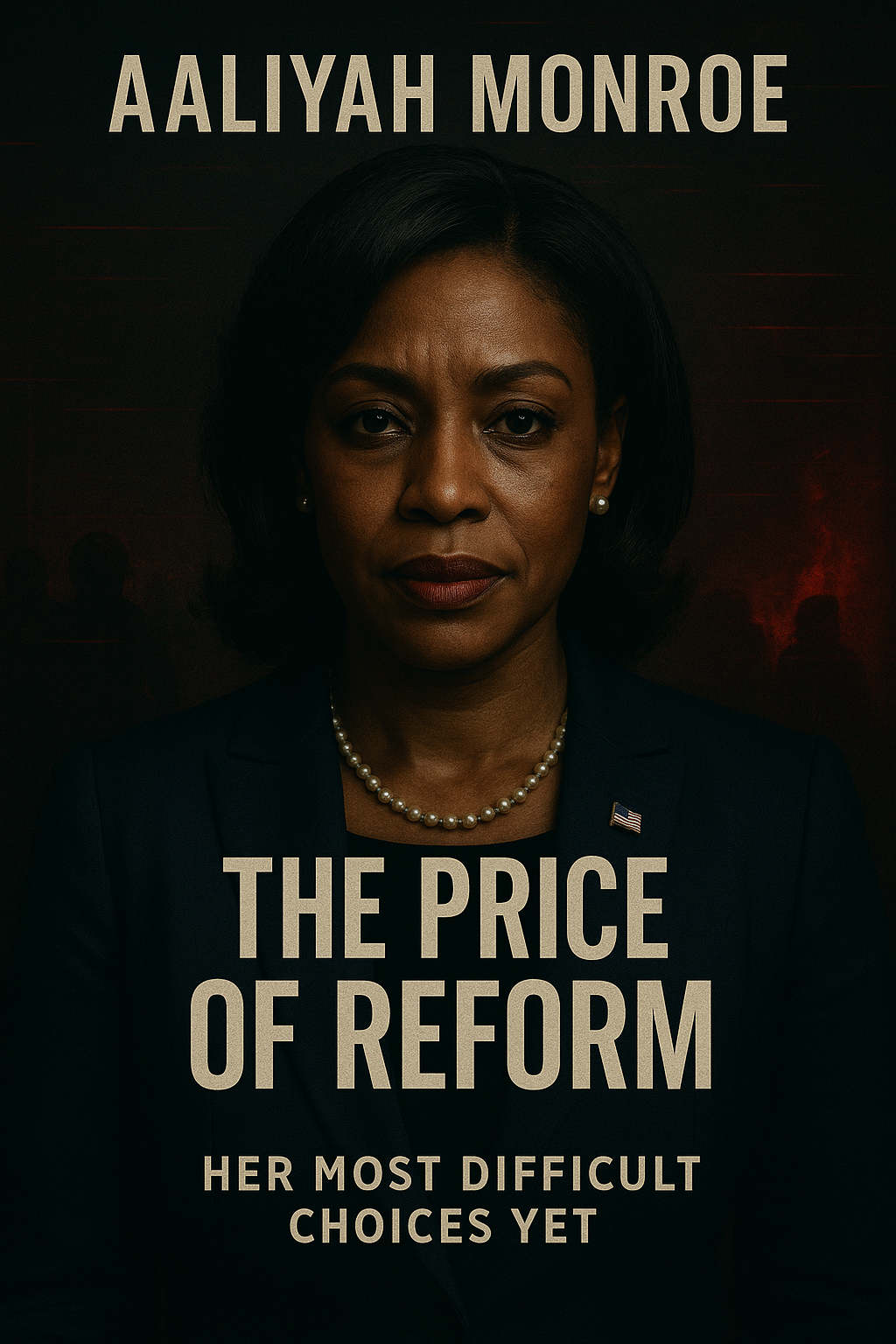
![Promotional poster featuring a woman with short black hair, wearing a pearl necklace, earrings, and a suit jacket with a small American flag pin. The background is dark with faint red highlights and silhouettes. Text at the top reads 'Aaliyah Monroe' and at the bottom 'The Price of Reform: Her Most Difficult Choices Yet'.]()
AALIYAH MONROE
Democrat Aaliyah Monroe built her career as a reformer — the polished, progressive voice promising equity from the podium. She speaks eloquently about justice, healthcare access, and compassion for the ignored. She is stylish, calm, intellect wrapped in elegance — the politician who always knows the right words to say. But behind the camera-ready perfection lies the weight of difficult decisions she justified for “the greater good.” When budget pressures mounted, she approved a hospital closure in a low-income district and redirected resources into neighborhoods that offered better political returns. She called it “smart policy.” Her colleagues praised her toughness. She defended a new set of triage protocols that prioritized survival likelihood over human bonds — policies that saved hospitals money but condemned countless families to grief.
Unlike Jack, Aaliyah convinced herself she was helping people. But in the process, she created invisible borders where some communities became expendable — “non-strategic,” as she signed into legislation. Her own daughter becomes the ultimate indictment of her decisions: when a pregnancy complication threatens her life, Aaliyah is forced to confront a nightmare built by her own hand. The laws she argued were necessary now stand between her child and the care she desperately needs. In Final Vote, Aaliyah’s perfect messaging cannot shield her from the truth — that empathy shouted into microphones means nothing if the policies behind the podium leave blood on the floor. Her camera smile cracks, revealing the terrifying steel beneath: the will to survive at any cost, even if it means someone else’s child dies instead of hers.
-
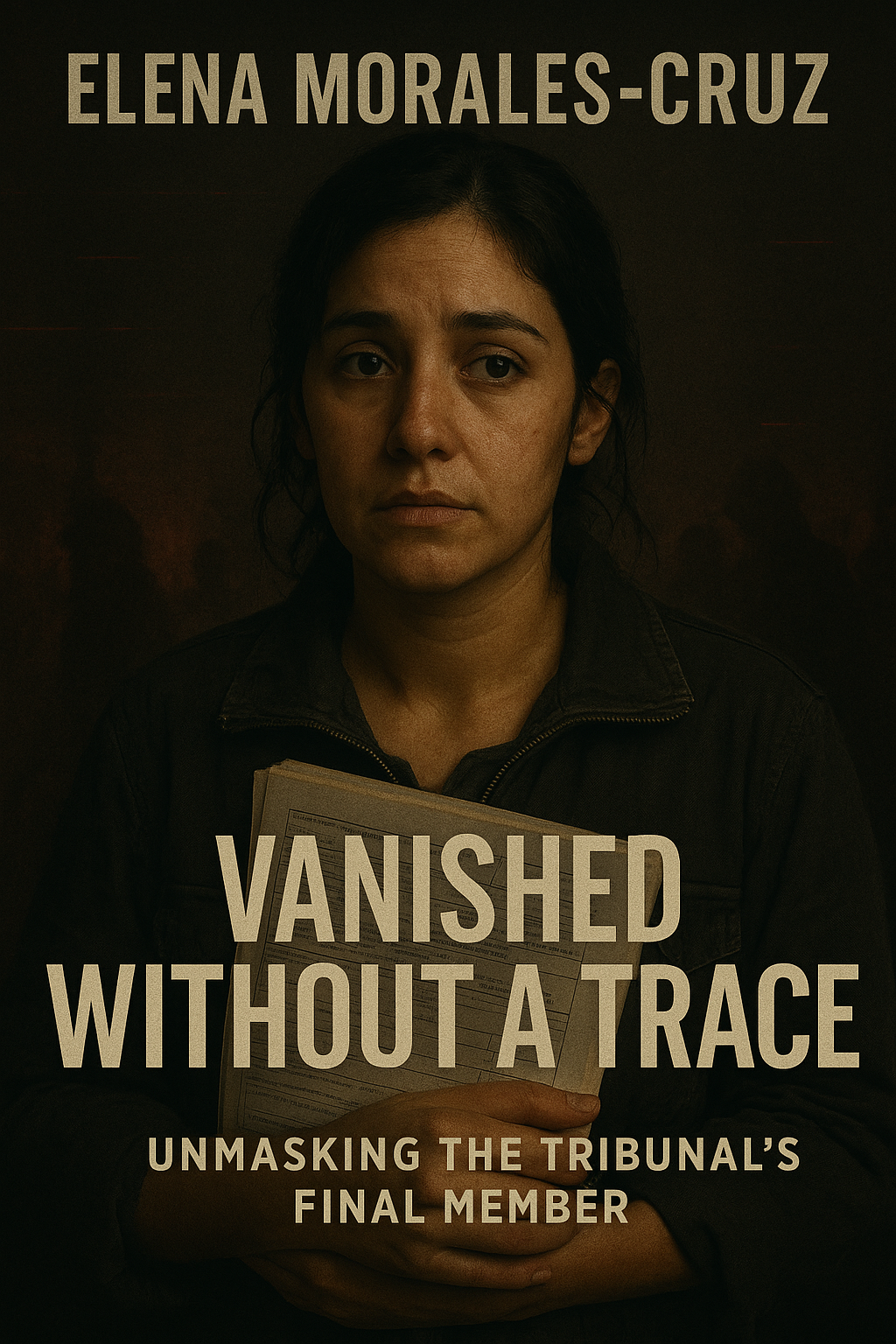
![Cover of a documentary titled "Vanished Without a Trace", featuring Elena Morales-Cruz, a woman with dark hair holding official documents, with a serious expression, and a dark background.]()
ELENA MORALES-CRUZ
Elena Morales-Cruz used to believe in the system. She filled out every form, stood in every line, pleaded with every government clerk who barely looked up at her — all while clutching the last photocopied record of her younger brother Mateo’s existence. He was a DACA recipient, a kind soul who worked two jobs and still found time to tutor kids in ESL night classes. Then one night, ICE swept through his workplace. The officers told her he’d be processed and released within 72 hours. But when Elena went searching for him, the system — the one politicians praised for “protecting Americans” — suddenly turned into a maze of denials. “There is no record of him.” “Are you sure he was ever detained?” Days turned into weeks. His phone went dark. His name vanished from every database. And Elena learned the most brutal truth of American immigration: a human being can disappear without a single official needing to care.
She became an activist out of desperation. She showed lawmakers emails, photos, identification — proof that her brother existed. They smiled for cameras and thanked her for “raising awareness,” then passed legislation that expanded the exact same detention authority that stole Mateo from her. Aaliyah Monroe used his story as a talking point; Jack Whitford dismissed cases like Mateo’s as “processing delays.” To both of them, her brother was never a person — only a statistic, an anecdote, a line in a speech. When Elena realized that the people responsible for destroying her family were congratulating themselves at a gala in a mansion built on old plantation wealth… something inside her broke. In Final Vote, every word she speaks comes from a place beyond anger — a quiet, exhausted fury of someone who did everything right and lost everything anyway. Elena doesn’t want revenge. She wants acknowledgment. Accountability. A name returned to the world. She wants them to finally feel the consequences of the policies they created. And she will not stop until they do.
-
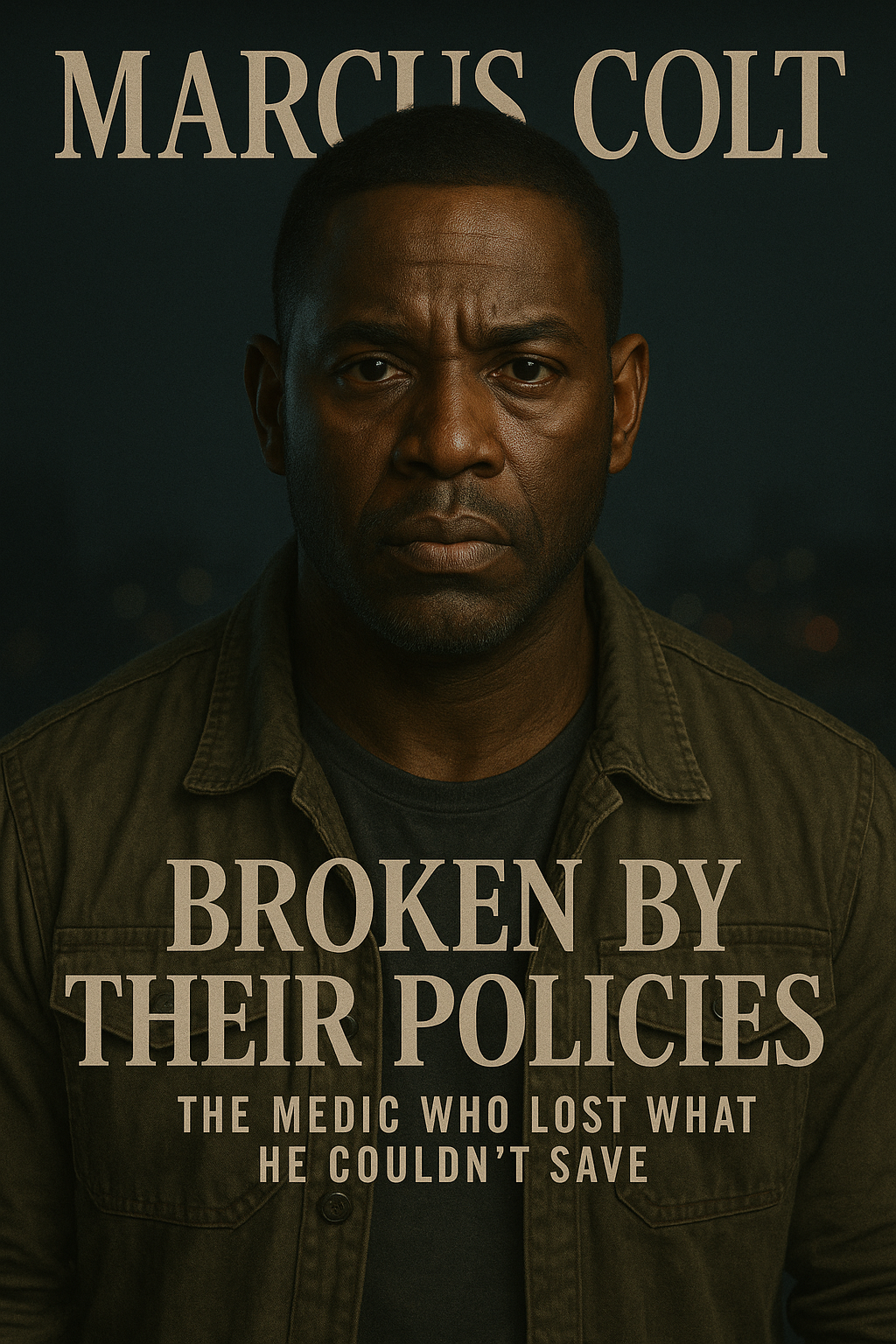
![Close-up portrait of a serious African American man wearing a dark green jacket against a dark background with city lights. Text overlay reads: "Marcus Colt Broken by Their Policies: The medic who lost what he couldn’t save."]()
MARCUS COLT
Marcus Colt served his country with everything he had. As a combat medic overseas, he stabilized the wounded under fire, saved friends who were barely clinging to life, and carried the weight of those he couldn’t save. When he finally came home, he thought the battlefield was behind him. He was wrong. His younger sister, Alicia, was the light of his life — a musician, the kind of person who danced even when no music was playing. One night she went to a concert, just hours after a bill expanding access to high-capacity firearms failed to pass by a single vote. A man with a history of violent threats legally purchased a weapon that should have been restricted. He walked into the venue and sprayed bullets into a crowd. Marcus arrived at the scene in time to hold Alicia’s hand as the life left her eyes — powerless for the first time since his military service began. It wasn’t just a gunman who killed her. It was paperwork. Policy. Political grandstanding.
In the months that followed, Marcus watched the same politicians who dismissed gun reform as “political theater” offer their thoughts and prayers — shallow clichés poured into microphones. While Alicia was lowered into the ground, Jack Whitford spoke about protecting “the rights of responsible owners,” and Aaliyah Monroe warned legislation “could alienate donors.” Neither uttered her name. Neither cared that the loopholes they protected cost an innocent woman her future. Marcus spiraled into a private war of grief and clarity: the bullets that killed his sister were cast from cowardice and denial. So when he stands face-to-face with those responsible in Final Vote, he doesn’t scream — he doesn’t have to. The challenge he oversees forces Jack and Aaliyah to choose, again and again, between self-preservation and the truth they always avoided. For Marcus, this isn’t revenge. It’s an autopsy of policy failure. It’s making them hear the click of a chamber and wonder if their own choices have finally come home to kill them.
-
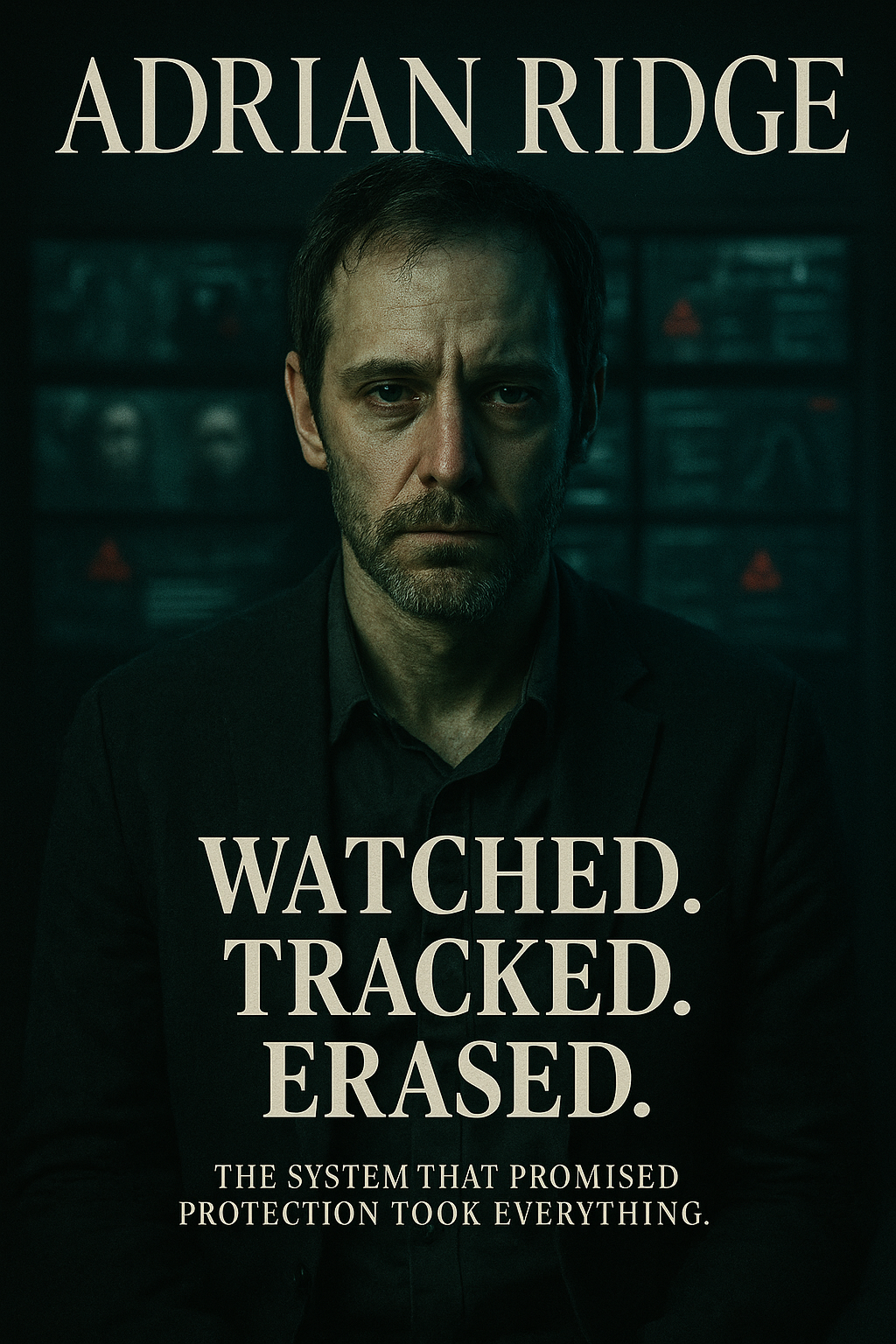
![Poster featuring Adrian Ridge with dark background and bookshelf, slogan 'Watched. Tracked. Erased.' and tagline about a system that took everything.]()
ADRIAN RIDGE
Adrian Ridge once believed data could save lives. A brilliant analyst who built statistical models for healthcare access and emergency response, he saw patterns before anyone else noticed the damage. Every night, his screens lit up with numbers that foretold tragedy: neighborhoods labeled “financially inefficient,” hospitals days away from shutting down, at-risk patients who would be denied care because they couldn’t afford the right insurance code. Adrian begged policymakers to intervene — to stop optimizing budgets and start protecting human beings. Jack Whitford and Aaliyah Monroe each praised “innovation,” but ignored his reports that warned an entire population would soon fall off the map. When the closures came, they pointed to the spreadsheets Adrian built and said, “This is what the data supports.” The truth was simpler: profit won. People lost.
One of those people was the woman Adrian loved. She collapsed at home during a crisis Adrian’s own analysis had predicted — but the nearest hospital had been shuttered under health policy the politicians both championed. The ambulance drove past its locked doors and toward a facility miles away. He rode beside her the entire way, holding her hand as monitors screamed and seconds bled into minutes the system simply didn’t plan for. She died in transit — another casualty buried in the fine print of legislation designed to look good on a podium. Afterward, reporters asked the politicians if the closures were a mistake. They said, “There’s no evidence anyone has been harmed.” Adrian has lived with that lie every day since. In Final Vote, his calm is not serenity — it’s the silence of a man who realized the people in power will only care when they are finally forced to feel what they’ve done.
-
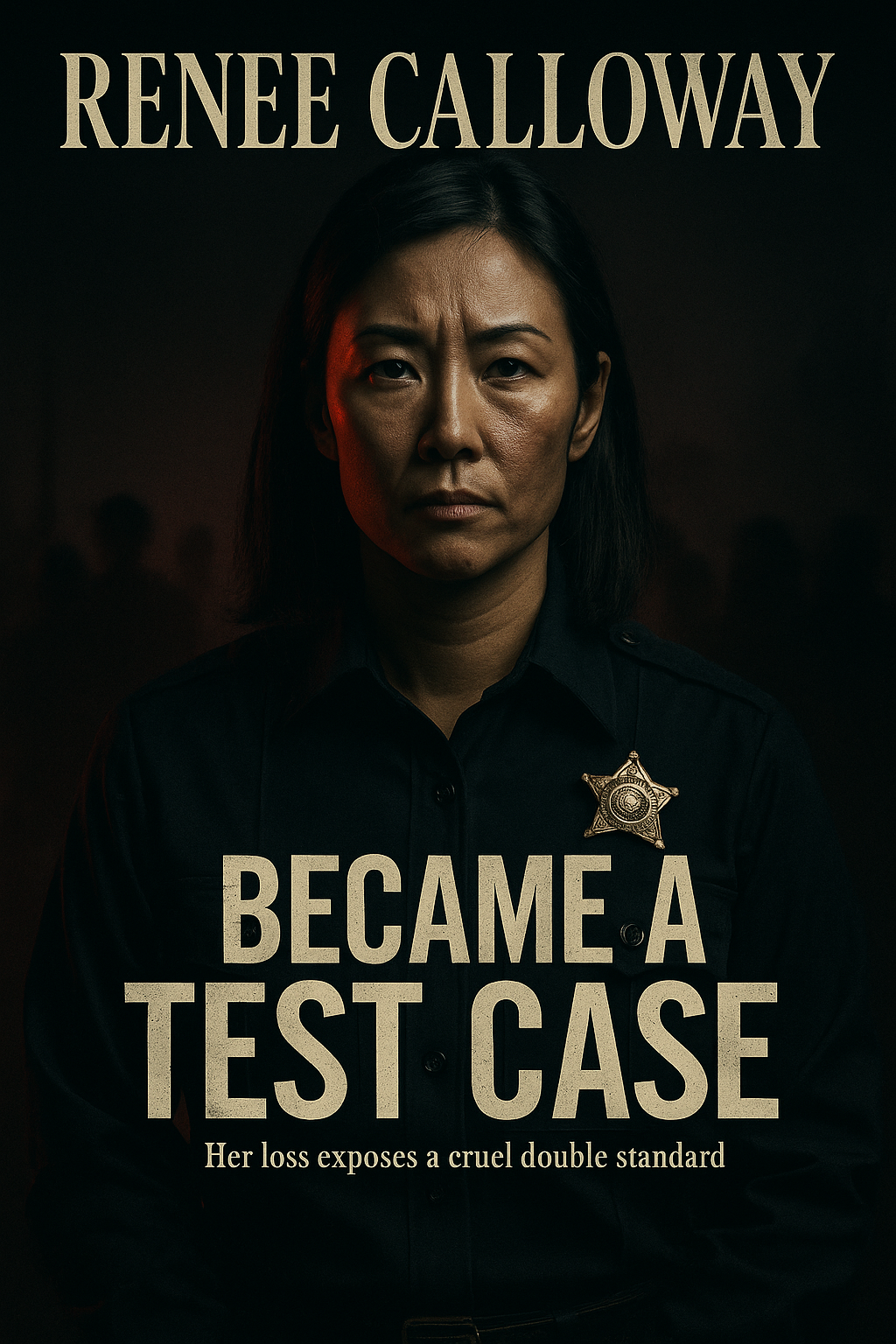
![Poster of a woman in a police uniform with a badge, with the title 'Renee Calloway Became a Test Case' and a tagline 'Her loss exposes a cruel double standard'.]()
RENEE CALLOWAY
Renee Calloway spent her adult life upholding rules she believed were designed to protect people. As a private security professional, she kept politicians safe in the very spaces where life-or-death laws were debated. She heard speeches about “respecting life,” about “protecting the unborn,” about “making families stronger.” But none of those slogans mattered the night her younger sister collapsed in an ER while pregnant — begging for help as doctors stood helplessly nearby. The state law they all celebrated required physicians to prove “immediate and undeniable mortal danger” before taking action. So staff waited. Lawyers made calls. And Renee watched her sister — a real woman with a real heartbeat — bleed out while a terrified medical team tried to decide whose life the law valued more. There were no politicians in that hallway. Only a baby who didn’t survive, and a body bag zipped shut around a woman who should still be alive.
In the aftermath, the statements rolled out like scripts:
“Tragic but rare.”
“Doing everything by the law.”
“We will review the policies.”
Meanwhile, Renee buried her sister and faced the horrifying truth: the law wasn’t written to save lives — it was written to avoid blame. When she sees Jack Whitford and Aaliyah Monroe exchanging smirks on stages and news panels while discussing reproductive rights, she knows both helped create the system that murdered her sister through bureaucratic hesitation. They debated moral hypotheticals. Her family paid in blood. In Final Vote, Renee doesn’t seek revenge — she demands a reckoning. She forces the same politicians who insisted “the law is clear” to confront what their clarity has cost. And when a young woman’s life once again hangs in the balance, Renee becomes the one voice insisting: this time, no more waiting. -
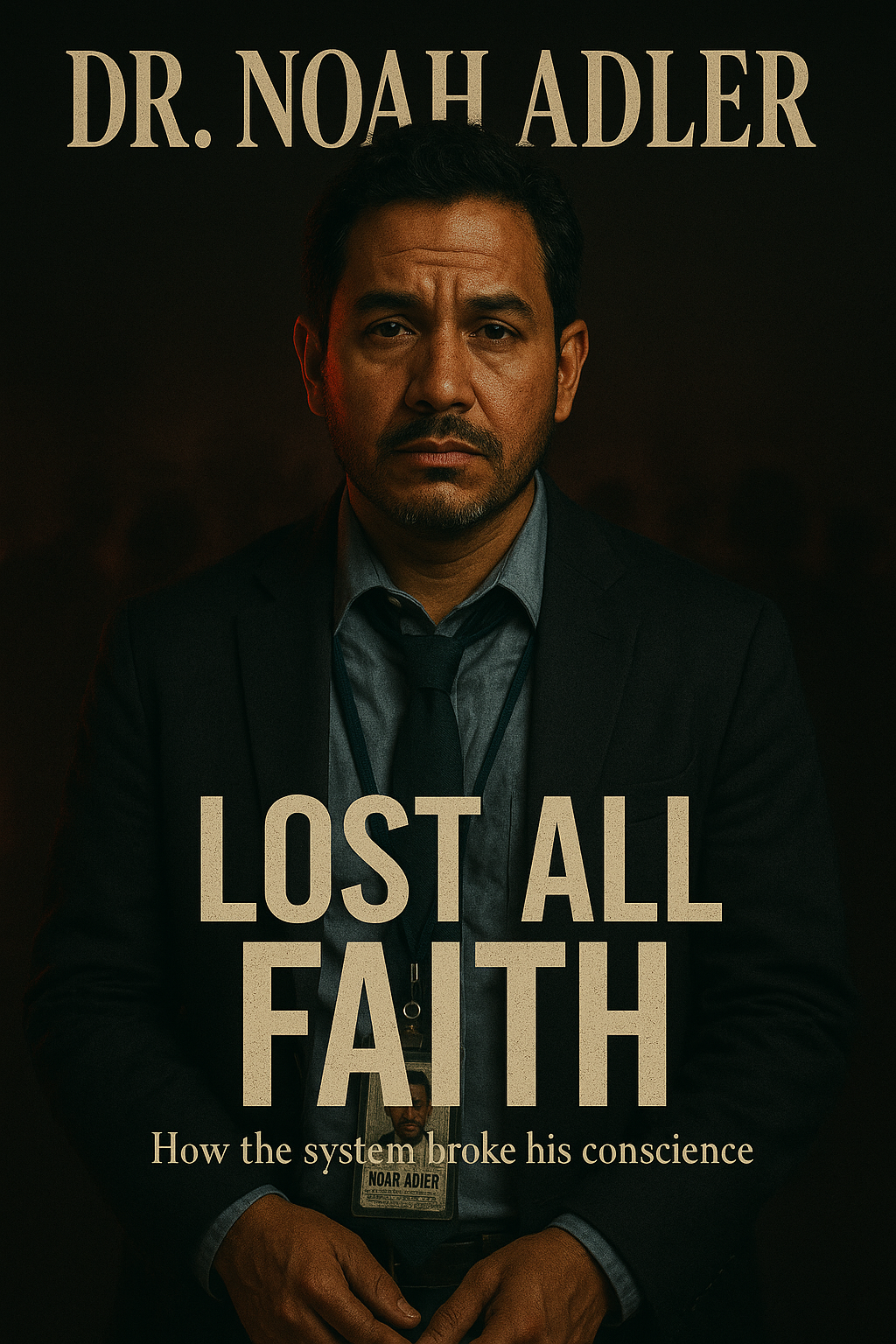
![Movie poster featuring a serious man in a suit with a badge labeled 'Noar Adier' hanging around his neck, with the title 'Lost All Faith' and the subtitle 'How the system broke his conscience' written on it.]()
NOAH ADLER
Dr. Noah Adler didn’t become a doctor to make money — he became one because he believed saving a human life was the highest calling imaginable. But the system he entered wasn’t designed to save people. It was designed to measure them. Insurance approvals, coverage tiers, treatment algorithms, waitlist scores — life reduced to a spreadsheet and a stopwatch. Noah fought to push patients through the cracks they were falling into. One night, a teenage boy who’d been shot was rushed into his ER. Noah knew exactly what to do, exactly how to save him — but the insurance company refused to authorize the procedure needed to stop the bleeding. “Out of network. Not approved.” He begged the hospital leadership. He argued that time was life. But policy wasn’t written for urgency; it was written for cost efficiency. The boy died staring into Noah’s eyes — terrified, alone, and priceless in all the ways the law refused to recognize.
In the days that followed, Jack Whitford and Aaliyah Monroe both downplayed the outrage, claiming reforms were “in progress” and “the system is working — for most people.” Noah stopped sleeping. He shut himself in dark rooms with glowing screens, rewatching the footage, replaying the boy’s last moments, trapped in the loop of a preventable death. He saw the press conferences where politicians smoothed over suffering with rehearsed empathy, then quietly voted for bills that further restricted access to care in communities considered “too risky” or “not cost-effective.” In Final Vote, Noah isn’t a zealot — he’s a man who has watched policy steal the beating heart right out of his profession. He stands as the moral warning the others ignored: if you build a healthcare system that treats money as more valuable than a human life… eventually, someone must answer for the bodies left behind.


PRE-ORDER CAST YOUR VOTE
Who lives? Who dies?
Pick Your Survivor.
Stand With Your Side. Only $9.99
Majority rules the final cut.
CAST YOUR VOTE
Your vote is tracked in real time. Your decision reshapes the story. Your voice controls the fate of both candidates.
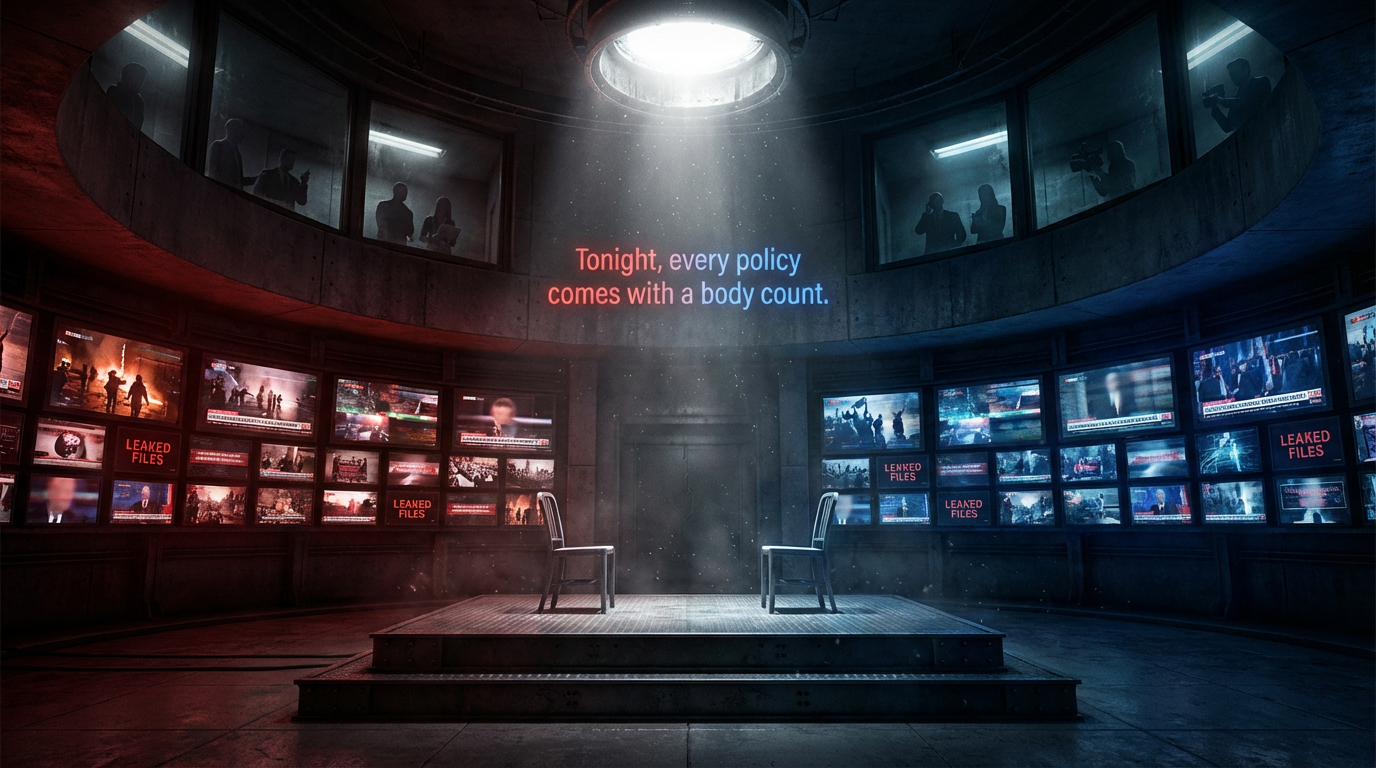
WHOSE WINNING IN THE POLLS?

The battle shifts every day.
Current standings updated: 12.02.2025
The winning side lives at the end of the movie.
OUR PREVIOUS MOVIES.